
Bike Life Moto Stunt Games
TapNationSports
4.71.41K Reviews
- Version
- 1.4.11
- Installs
- 10.00M
- Age Rating
- Everyone
Screenshots
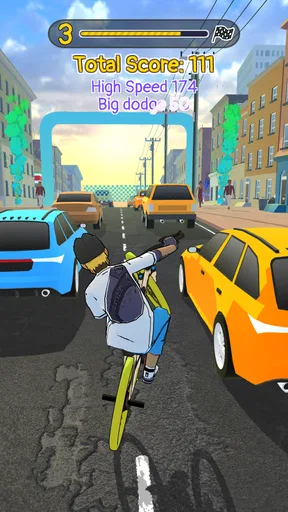
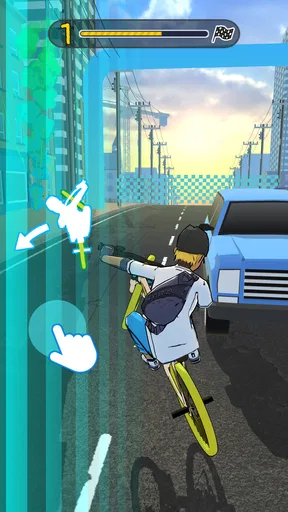
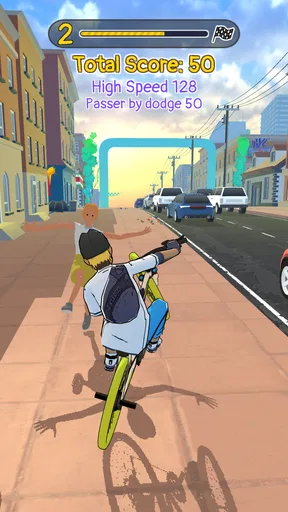
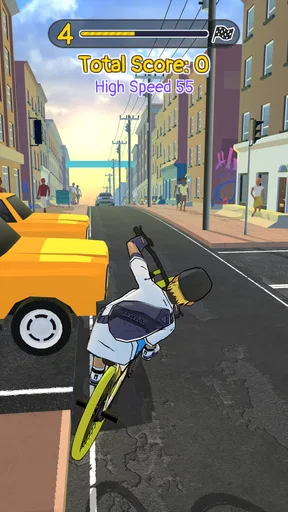
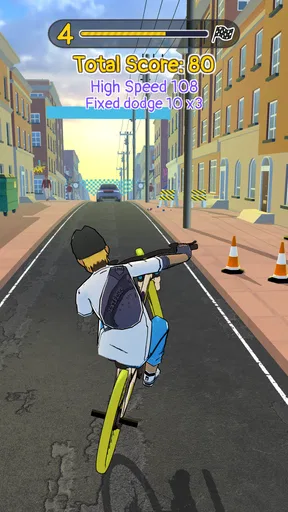
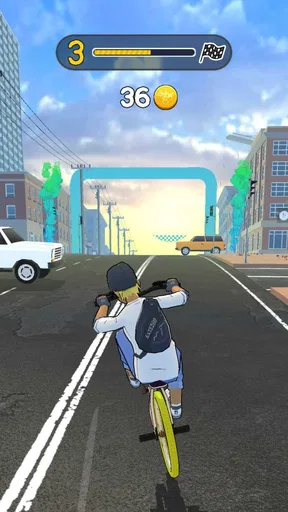
Our Review of Bike Life Moto Stunt Games
 Analysis by Appyee
I spent time with Bike Life Moto Stunt Games to see whether its simple promise of riding, flipping, and balancing a motorcycle can carry a full casual gaming session. My first impression was that it is built for quick bursts rather than a serious racing career. You pick it up, try to keep the bike moving cleanly, chase a better stunt, and restart when a mistake ruins the run. That straightforward loop is the main reason it is easy to understand, but it is also the reason some players may eventually want more depth.
This is a free sports game from TapNation, aimed at Everyone, and it has the kind of immediate control scheme that works well on a phone. It does not ask me to learn a complicated set of buttons before having fun. Instead, the challenge comes from timing, balance, and deciding how aggressively to approach each stunt. I found it most enjoyable when I treated each attempt as a small experiment rather than expecting a complete motorcycle simulator.
How the first few sessions feel
The early goal is refreshingly clear: stay on the bike, perform the required movement, and get through the stunt without losing control. The game’s focus on wheelies and flips gives every short attempt a visible purpose. Even when I failed, I usually understood why. I had lifted the front wheel too far, committed to a rotation too late, or tried to recover from an awkward landing instead of preparing for it.
That clarity matters in a mobile sports game. There is no long explanation standing between the player and the first ride. I could begin testing the bike almost immediately, then adjust my timing through repetition. The opening experience is therefore better suited to someone who wants a quick challenge than to someone looking for a detailed tutorial or a realistic training mode.
One useful habit is to make the first runs about learning the rhythm rather than chasing the most dramatic stunt. I found that controlled movement gives me more information than constantly attempting a maximum flip. Watching how quickly the bike reacts helped me decide when to make smaller corrections. This is an important distinction: the game rewards patience inside an activity that looks naturally reckless.
The early objectives also create a practical reason to replay a section. A failed attempt is rarely wasted because it shows which part of the movement needs attention. If the landing is the problem, I can focus on finishing the rotation earlier. If the wheelie becomes unstable, I can reduce how long I hold the bike at its steepest angle. That kind of self-correction is more satisfying than simply repeating a level without learning anything.
What progress feels like during play
The strongest progress signal is personal consistency. I may not feel that I have mastered the game after one successful run, but I notice when a maneuver that previously felt random starts becoming repeatable. A clean landing, a longer wheelie, or a stunt completed without panic gives the session a natural sense of improvement.
That approach makes the game accessible to different kinds of players. A newcomer can be pleased just to finish a difficult sequence, while someone more experienced can chase smoother execution. I prefer this kind of informal progress in a short-session game because it keeps the focus on riding skill instead of burying the core action under menus and statistics.
At the same time, players who need a large collection of clearly explained unlocks may find the progression less compelling than in a traditional racing game. The appeal here comes from the act of improving control and completing stunt-focused challenges. It is not the best choice if your main motivation is building a garage, managing a rider, or following a long career with detailed milestones.
A practical way to keep the experience fresh is to give each run a separate target. On one attempt, I might prioritize staying upright. On the next, I might work on a more ambitious flip. After that, I can try to connect the movement with a cleaner landing. This prevents every restart from feeling identical and turns the same basic course of action into a small practice routine.
The game’s broad popularity suggests that this compact format has found an audience. It has passed 10 million installs and holds a 4.7 average from around 88 thousand ratings, which fits my impression that the immediate controls and stunt premise are easy for many players to pick up. Those figures do not change the experience for everyone, though. A player who wants deep simulation will still notice the limits of a short, arcade-style design.
Challenge, timing, and the difficulty curve
The difficulty does not come from complicated rules. It comes from precision. A bike that looks stable can become difficult to recover once its angle changes, and a stunt that seems almost complete can fail during the landing. I liked that the challenge was readable: the game makes me pay attention to momentum and balance instead of asking me to memorize a large move list.
The most effective way to approach a hard section is to separate the stunt into phases. First, I establish control. Then I commit to the lift or rotation. Finally, I prepare for the landing instead of treating it as an automatic conclusion. This sounds obvious, but the game’s quick pace encourages impulsive inputs. Slowing down mentally, even when the bike is moving quickly, made my attempts more reliable.
There is a trade-off here. The simple control model keeps the game approachable, but it can also make failure feel repetitive if a player does not enjoy practicing the same motion. The challenge is satisfying when I can identify a small improvement. It is less satisfying when I am looking for variety in objectives or a more elaborate technical system.
I would not recommend approaching it as a realistic motorcycle title. Compared with a conventional racing game, it places much more attention on stunt timing and less on racing lines, vehicle setup, or competition strategy. Compared with a dedicated motorcycle simulator, it is far more accessible but far less concerned with realism. For me, that makes it a better fit for a short break than for a long evening of serious racing.
The minimum operating requirement is Android 7.0, so it is available to people using a wide range of Android devices. I still think the best experience depends on comfortable touch control and a screen that lets me see the movement clearly. On a smaller display, rapid corrections can feel more cramped, especially when I am trying to judge the landing at the end of a rotation.
Where the pacing works and where it presses
The pacing is built around immediate attempts. I can play for a few minutes, stop, and return later without needing to remember a complicated story or a long sequence of objectives. That makes it useful during a commute, while waiting for an appointment, or when I want something more interactive than scrolling through social media.
A realistic everyday scenario is a short break after work. I might have only ten minutes, so I start with one run to regain the feel of the bike, then spend the remaining time trying to make one difficult stunt consistent. The game suits that situation because a failed attempt does not require a major investment of time. The same design is less suitable when I want a sense of a long session with changing events and a clear narrative destination.
The free entry point is another advantage. I can try the riding loop without paying first, which is important because the game’s appeal depends heavily on whether I enjoy repeating stunt attempts. In-app purchases range from $1.99 to $6.99 per item. I would advise treating those purchases as optional until the basic handling has earned your interest. There is little reason to spend immediately on a game whose central question is simply whether its stunt rhythm feels good to you.
The main retention pressure comes from the desire to improve a failed run and prove that a successful stunt was not luck. That can be a healthy kind of motivation because it is connected to skill. However, it can also become a loop of quick restarts without much variety. I found it more enjoyable when I set a stopping point, such as ending after a clean attempt, rather than continuing indefinitely in pursuit of a perfect run.
Players who dislike repeated attempts should think carefully before installing it. The game’s core pleasure is not discovering a large world or managing a growing team. It is making a physical-looking stunt work through better timing. If that sounds satisfying, the repetition supports the experience. If it sounds like busywork, the free download will not solve that mismatch.
Who will enjoy it most
I would recommend this game to casual players who like arcade sports, stunt clips, and controls that can be understood quickly. It is also a good option for someone who wants a lightweight motorcycle game without the commitment of a full racing campaign. The Everyone rating makes it suitable for a broad audience, although younger players should still be guided about optional purchases on a shared device.
It is especially appealing if you enjoy turning a failed attempt into a small lesson. The game gives me enough control to feel responsible for a mistake, which is more motivating than losing because of an unclear rule. I also like it for short sessions because I can choose a narrow goal and stop once I reach it.
I would point more demanding players toward a different type of game if they want licensed bikes, realistic handling, deep customization, online competition, or a structured championship. Those expectations belong to another part of the sports category. This title is strongest when judged as a compact stunt playground, not as a complete motorcycle career.
It is also not ideal for someone who needs constant novelty. The central actions remain riding, balancing, flipping, and landing. The satisfaction depends on refining those actions, so the game asks the player to bring some of the long-term motivation. If you prefer a steady stream of new mechanics, a campaign-driven sports game may hold your attention longer.
My verdict on the progression loop
Bike Life Moto Stunt Games understands that a mobile stunt game should get to the action quickly. Its early goals are easy to grasp, its progress is visible through better control, and its difficulty encourages practice without requiring specialist knowledge. I found the best moments came from turning a shaky maneuver into a repeatable one, especially when I stopped chasing spectacle and concentrated on the landing.
The progression is therefore effective but focused. It sustains play for people who enjoy mastery, not necessarily for people who need a large reward structure around every attempt. The pacing works well in short bursts, while the limited variety can become noticeable during longer sessions. That balance is the central trade-off: accessibility and immediacy on one side, depth and long-term structure on the other.
TapNation has delivered a free sports game that is easy to test and easy to understand. The current version is 1.4.11, and the game remains a sensible download for anyone curious about motorcycle stunts on a phone. I would begin without buying anything, spend several sessions learning the timing, and then decide whether the repeatable challenge is enough to keep me coming back.
My final recommendation is positive with a clear condition: choose it if you want quick, touch-friendly stunt practice and enjoy improving through repetition. Skip it if you are searching for a realistic racing simulator, a deep upgrade system, or a long-form competition structure. For the right player, the real reward is cleaner control rather than a complicated progression screen, and that gives the game a simple but genuine reason to keep riding.
Verdict
Strengths of Bike Life Moto Stunt Games
- Responsive controls make stunt combos easy to perform.
- Short levels are suitable for quick gaming sessions.
- Bike upgrades add variety and improve progression.
- Bright visuals make obstacles easy to recognize.
- Offline play is convenient when no internet is available.
Limitations of Bike Life Moto Stunt Games
- Repeated level layouts can make later gameplay feel predictable.
- Some bikes and upgrades may require substantial grinding.
- Frequent ads can interrupt the flow between attempts.
- Physics occasionally feel inconsistent during landings.
- The game may drain battery during longer play sessions.
Other Releases by TapNation
View All
Thief Puzzle: to pass a level
Puzzle4.6

Guess Their Answer - IQ Games
Trivia4.4

Parking Jam: Car Parking Games
Strategy4.4

Hoop World: Flip Dunk Game 3D
Sports4.7
Similar Picks in This Category
View All
8 Ball Pool
Miniclip.com4.8

Pooking - Billiards City
AIM TOP GAME TECHNOLOGY LIMITED - pool4.6

Carrom Pool: Disc Game
Miniclip.com4.4

EA SPORTS FC Soccer Mobile 26
ELECTRONIC ARTS4.6

World Soccer League
mobirix4.3

Soccer Cup 2026: Football Game
INLOGIC SPORTS - football tennis golf soccer4.3
Frequently Asked Questions
What is Bike Life Moto Stunt Games?
Bike Life Moto Stunt Games is an action-focused motorcycle game built around stunt riding, obstacle courses, ramps, jumps, and fast-paced challenges. Players control a bike through short levels that require balance, timing, and careful acceleration. The game is aimed at casual players who enjoy arcade-style motorcycle action rather than a highly realistic racing simulator.
How do you play Bike Life Moto Stunt Games?
Gameplay generally involves controlling the motorcycle with simple touch controls while guiding it across platforms, ramps, and other obstacles. You need to manage speed, keep the bike balanced in the air, and land safely to complete each challenge. Progress depends more on timing and control than on complicated controls, making it relatively easy to start but harder to master.
Can Bike Life Moto Stunt Games be played offline?
The availability of offline play can depend on the specific version installed and the features being accessed. Basic stunt levels may work without a constant internet connection, but advertisements, updates, rankings, rewards, or other online services may require connectivity. It is recommended to open the game once while online and check its behavior before relying on it during travel or in areas with limited service.
Is Bike Life Moto Stunt Games free to download?
Bike Life Moto Stunt Games is typically offered as a free download, allowing players to install it without paying an upfront purchase price. However, free games may include advertising, optional in-app purchases, or other monetized features. Before downloading, check the official Google Play Store or Apple App Store listing for the current pricing, supported devices, age rating, and any purchase-related information.
Is Bike Life Moto Stunt Games suitable for children?
The game may be suitable for children who enjoy simple motorcycle and stunt gameplay, but parents should review the store rating and content details before installation. The main concerns are usually advertisements, optional purchases, and possible links to external services rather than realistic violence. Younger players may also need supervision to prevent accidental purchases and to help them understand the controls.
Play our best games!


